


Scientific and General Sector

Prof. dr Predrag Marković
scientific advisor, director
PREDRAG J. MARKOVIĆ (Belgrade, 1965), scientific adviser, graduated in 1986 from the Faculty of Philosophy, University of Belgrade, with an average grade of 9.88. He obtained the title of Master of Historical Sciences in May 1991, defending his master’s thesis, “European Processes on the Modernisation of the Society of Belgrade and Yugoslavia 1918–1941”, at the Department of General Contemporary History, Faculty of Philosophy, University of Belgrade. He became a Doctor of Historical Sciences in November 1995, after defending his doctoral dissertation, “Cold War and Yugoslav Society (the case of Belgrade) 1948–1965”. Since March 1987, he has been employed at the Institute for Contemporary History in Belgrade. At the meeting of the Board of Directors of the Institute on 11 April 2019, he was appointed Director of the Institute for Contemporary History.
As a visiting professor, he has taught at the Faculty of Teacher Education, University of Belgrade; Lincoln University; University of Pennsylvania; Faculty of Philosophy, University of Pristina with temporary headquarters in Kosovska Mitrovica; the Centre for Multidisciplinary Studies, University of Belgrade – Department of History of Science and Technology; the Belgrade Open School; and the Faculty of Media and Communication, Singidunum University. He was elected a member of the European Academy of Sciences and Arts in Salzburg in December 1997. He has been a member of the Branding Council of Serbia and acting President of the Board of Directors of the Museum of the History of Yugoslavia.
In September 2015, he was elected Vice President of the Socialist Party of Serbia. Before this, he was a member of the RTS Board of Directors. In the 2020 parliamentary elections, he was elected as a deputy of the National Assembly of the Republic of Serbia representing his political coalition.

Dr Bojan Dimitrijević
scientific adviser, deputy director
BOJAN B. DIMITRIJEVIĆ (Belgrade 1968) Principal Research Fellow and Deputy Director of the Institute for Contemporary History. Educated at the Universities of Belgrade and Novi Sad, CEU Budapest and University of Bradford. His research into the military history of the former Yugoslavia, and the Balkan in the World War II, the Cold War, and diverse conflicts ever since. He has published over 100 books and 140 scientific articles in Serbia, Republika Srpska, Croatia, Slovenia, Germany, Italy, Great Britain, Rumania, Poland and United States. In period 2003-2012, he served as advisor to the Minister to the Serbian Minister of Defence, the Minister of Foreign Affairs and to the President of Serbia, as Assistant to the Minister of Defence, and member of the Belgrade City Parliament.

KOSTA NIKOLIĆ (1963), Principal Research Fellow. Graduated from the Faculty of Philosophy, University of Belgrade. (BA 1988, MPhil 1993, PhD 1999). Realms of his professional interest are history of Communism in the interwar Yugoslavia, Serbian society in the Second World War, ethnic conflicts and dissolution of former Yugoslavia and wars in Croatia and Bosnia and Herzegovina. He participated in numerous domestic and international scientific meetings and was engaged as an editor and editorial board member of several scientific journals. So far, he has published five textbooks for primary and secondary school, 50 monographs and 160 papers in scientific journals in Serbia and abroad.

RANKA GAŠIĆ (1965), scientific advisor, graduated in 1989 and master’s degree in 1995 at the Department of History of the People of Yugoslavia in the New Century and received her doctorate in 2003 at the Department of General Contemporary History, with the thesis British and German influence on the Belgrade elite 1936-1941. Since 1996, she has been permanently employed at the Institute of Contemporary History in Belgrade. She did research in Germany, as a scholarship holder of the DAAD Foundation in 1997 (in Leipzig, Bonn and Berlin) and of the Society for Southeast Europe from Munich in 1998 (at the Institute for the World Economy in Kiel), as well as of the CEEPUS program at the University of Graz (Austria) in 2005. She collaborated on the project of the Academy of Sciences in Vienna, “History of the Habsburg Monarchy 1848-1914”, from 1998 to 2006. During 2003 and 2004, she was the coordinator of the professional network “South-East Europe Minorities” for Serbia and Montenegro, with the center in Bonn. From 2013 to 2016, she was engaged in the University of Basel project, “SIBA – A Visual Approach to Explore Everyday Life in Turkish and Yugoslav Cities, 1920s and 1930s”. He is the author of four monographs and a number of works in domestic and foreign magazines and anthologies. She translated six monographs in the field of history from the German language. He is a member of the Association for Social History in Belgrade, an associate member of Matica Srpska in Novi Sad. Since 2007, he has been a member of the Board of Directors of the Center for History, Democracy and Reconciliation in Novi Sad, and the Association of Researchers of the Institute of Humanities in Belgrade.

Dr Stanislav Sretenović
scientific adviser
STANISLAV SRETENOVIĆ (Belgrade, 1970) is a Senior Research Fellow and Research Professor at the Faculty of Political Science, University of Belgrade. He was the principal investigator of the project “The Multiethnic State and National Identities: The Serbian Experience in the 20th Century – SERBIE20,” supported by the Science Fund of the Republic of Serbia within the Ideas program (2022–2025), and a member of the academic research groups SIRICE and ISP in France. After completing his undergraduate studies in history at the Faculty of Philosophy, University of Belgrade, he obtained his master’s degree and specialization at the University of Nancy (France) and earned his Ph.D. at the European University Institute in Florence (Italy), with a dissertation on unequal inter-state relations between France and Yugoslavia in the interwar period. He has been a visiting researcher, invited professor, or thesis committee member at the Sorbonne University (Sorbonne Université and Panthéon-Sorbonne), the University of Nanterre, the School for Advanced Studies in the Social Sciences (EHESS), the Paris Institute of Political Studies (Sciences Po), the universities of Nancy, Bordeaux, and Nantes, the Saint-Cyr Military Academy in Coëtquidan, the French Academy in Rome (EFR), the University of Bucharest, and the universities of Bradford and Birmingham (UK), as well as the University of Chicago. He has participated in numerous conferences in Serbia and abroad. He is the author of several monographs, and has published over 100 scholarly papers in prominent national and international academic journals. Sretenovic has served as a member of the editorial board of the academic journal Istorija XX veka, president of the commission of the Ministry of Culture of the Republic of Serbia for selecting the content of the Serbian Cultural Center in Paris (2011), a member of the Boards of the Institute for Contemporary History (2014–2018) and a of the Belgrade City Institute for the Protection of Cultural Monuments (2020–2024).. He is an expert on French-Serbian relations within the national, regional, and European context of the 20th century.

Dr Goran Miloradović
scientific adviser
GORAN R. MILORADOVIĆ (1965, Novi Bečej, Serbia) is a Principal Research Fellow. He started his history studies at the Faculty of Philosophy at the Belgrade University in 1987, and graduated in 1994 with the thesis Historical Background of the Zamyatin’s novel »We« at the Department of General Contemporary History, under the mentorship of Prof. Andrej Mitrović, PhD. He finished his M. A. thesis Confinement Camps in the Kingdom of Serbs, Croats and Slovenes from 1919 to 1922. in 2000 at the same Department. Miloradović’s PhD thesis Soviet Influence in the culture in Yugoslavia from 1945 to 1955, was completed under the guidance of prof. Ph. D. Miroslav Jovanović in 2009. Fields of interest: history of central and East Europe (Russia, Habsburg monarchy, Serbia, Yugoslavia), social history, cultural history, history of ideas and ideologies. Miloradović is a member of the Editorial Board of Annual of Social History and president of the Governing Board of the Serbian State Archives since 2025.

Dr Dragomir Bondžić
scientific adviser
DRAGOMIR BONDŽIĆ (Kruševac, 1973). Principle research fellow, obtained a bachelor’s degree in 1999, a master’s degree in 2003 and a doctorate in 2010 at the Department of History of Yugoslavia at the Faculty of Philosophy in Belgrade. Since 2000, he has been working at the Institute for Contemporary History in Belgrade. His research focuses on the history of Yugoslavia and Serbia in the 20th century, with a particular emphasis on the history of education, higher education, science, international scientific-educational cooperation and nuclear technology and energetics during the Cold War. He has published nine monographs, around 160 articles and some 60 reviews in academic journals and collections of papers. He has participated in 80 national and international scientific conferences in Serbia and abroad (Croatia, Macedonia, Poland, Austria, Hungary, Romania, Algeria, Slovenia, Russia). He is co-author of several recognized history textbooks for primary and secondary school. He deals with local history, and he is one of the initiators and editors of the “Župski zbornik”, published by The Heritage Museum of Župa in Aleksandrovac. From 2016 to 2023 he was editor-in-chief of the journal of the Institute for Contemporary History “History of the 20th Century”. He is one of the initiators and editor-in-chief of the newly founded journal “Contemporary History”.

Dr Vladimir Petrović
scientific adviser
VLADIMIR PETROVIĆ Principal Research Fellow, completed graduate studies in contemporary history at Belgrade University, comparative history at Central European University and postdoctoral studies in transitional justice at NIOD Institute for War, Holocaust and Genocide Studies, Amsterdam. He started working as a trainee in 2002 in the Institute for Contemporary History, where he currently leads an Innovation Center.
Petrovic started as a historian of international relations of Yugoslavia, devoting his first book to evolution its Middle Eastern policies (2006) and a second one to Tito’s personal diplomacy (2010). Subsequently, he turned to researching of mass political violence and strategies of confrontation with its legacy. His book The Emergence of Historical Forensic Expertise: Clio takes the Stand (Routledge, 2017) examines the role of historians and social scientists as expert witnesses in some of the most dramatic legal encounters of the 20th century. His most recent book, Ethnic cleansing: genesis of the concept (Arhipelag, 2019) explores the origins of the concept of ethnic “cleansing”. Besides these books, he edited or coauthored six volumes and has published five volumes of primary sources. He also authored seventy articles and book chapter, both in Serbian and English.
Petrovic was also a recurrent visiting professor at Central European University, Boston University, Harvard Extension School and University of Amsterdam.

Dr Srđan Cvetković
scientific adviser
SRĐAN CVETKOVIĆ Principal Research Fellow. He completed his undergraduate, master’s, and doctoral studies at the Faculty of Philosophy in Belgrade. He concluded his decades-long research on political repression in 2011 with a doctoral dissertation titled Political Repression in Serbia 1945-1985. His areas of interest include: communism, state repression, dissidents, human rights, and the Cold War, on which he has published numerous papers in domestic and international scholarly journals and collections. He has participated in many domestic and international scientific conferences and panels and has given more than a hundred lectures dedicated to these topics.
Among others, he is the author of notable monographs: Between the Sickle and the Hammer − Repression in Serbia 1944−1953 (2006), Between the Sickle and the Hammer 2 – Political Repression in Serbia 1953-1985 (2011), Portraits of Dissidents (2007), The Birth of the Heretic (2011), Collaborators Before the OZNA Court (2016); OZNA – Repression of the Communist Regime in Serbia 1944-1946 – Documents (2019), Borislav Pekić: Life of a Rebel (2020). Forms of Resistance to the Communist Regime in Serbia 1945-1991 (2021), How Was Tito Created? – Technology of Building the Personality Cult of Josip Broz (2024). He was a professional collaborator in writing the Serbian Biographical Dictionary of Matica Srpska as well as with Službeni Glasnik in preparing the collected works of Dr. Dragoljub Jovanović.
From 2009 to 2015, he was the secretary of the State Commission for the Secret Graves of Those Killed by the Communist Regime in 1944/1945 under the Government of the Republic of Serbia. From 2010 to 2012, he was also a coordinator for research of the Inter-Academic Commission of SANU and MAN for the census of victims of the Second World War in Vojvodina 1941-1948. He is the author of the notable exhibition In The Name Of The People! (2014). He is one of the editors of the scientific journal for re-examining the past, Heretikus..

Dr Jasmina Milanović
scientific adviser
JASMINA MILANOVIĆ is a Principal Research Fellow. She has a BA, MA and PhD at the Department of History, Faculty of Philosophy, University of Belgrade. Her research deals with women`s societies in the Kingdom of Serbia and the Kingdom of Yugoslavia and the history of medicine. Milanović is the author of several monographs and over 50 journal articles. Since 2015, member of the Serbian Medical Association and member of the presidency of the Historical Section of the SLD. In 2016, she was elected a member of the Board of the Lexicographic Department of Matica Srpska. She has been a member of the European COST project, Women on the Move section, since 2020.

Dr Milan Gulić
scientific adviser
MILAN GULIĆ is a Serbian historian from the Institute of Contemporary History, Belgrade. He graduated and received his doctorate from the Faculty of Philosophy, University of Belgrade. He deals with various topics from Serbian national history of the 20th century, with a special focus on Serbs in Croatia. He has published five monographs, over 60 scientific articles and over 100 encyclopedic entries.

Dr Ivana Dobrivojević Tomić
scientific adviser
IVANA DOBRIVOJEVIĆ TOMIĆ (1975) principal research fellow. She graduated from the Faculty of Philosophy in Belgrade, Department of History of Yugoslavia. At the same department, she defended her master’s thesis: State Repression during the Dictatorship of King Alexander 1929-1935 and then received her doctorate with the topic: Village and City. Transformation of Serbia’s Agrarian Society 1945 – 1955. Her research focuses on state repression in the Kingdom of Yugoslavia, industrialization of socialist Yugoslavia, living standards of ordinary people, rural-urban migrations, life of youth in socialist Yugoslavia, and family planning. She was a visiting researcher at the Imre Kertesz College in Jena, the Institute for the Study of the History of Eastern and South-Eastern Europe in Regensburg and the Institute for the History of Eastern and South-Eastern Europe in Graz. She has written three monographs and over 70 articles published in domestic and international journals.

Dr Ratomir Milikić
scientific adviser
RATOMIR MILIKIĆ is Principal Research Fellow. He was born in 1980, in Belgrade, Serbia. Milikić graduated as a first in his generation, from the Faculty of Philosophy in Belgrade, the Department of History, with the thesis “Yugoslav-Turkish Relations and the Ankara Agreement (1952-1955).” In 2010, he defended the doctoral dissertation “Yugoslavia and the Parliamentary Assembly of the Council of Europe (1949-2003)”. His master thesis was “Coups D’état During the Reign of King Aleksandar Obrenovic,” which he defended at the Faculty of Law in Belgrade. He graduated from the Diplomatic Academy of the Ministry of Foreign Affairs of Serbia and Montenegro in 2005.
Since 2005 Milikić has been working at the Institute of Contemporary History in Belgrade, focusing his research on Yugoslavia’s pre and postwar bilateral and multilateral diplomatic history. Milikić authored (and coauthored) nine monographs, and more than sixty articles have been published under his name at home and abroad, and he attended many local, regional and international research and expert conferences. Apart from that, he coauthored half-dozen history schoolbooks, for different school levels in Serbia. Milikić is a renowned and praised expert in the field of phaleristics. He is also the editor of historical publications and primary consultant for related video materials, maps and learning objects at the Belgrade-based “Klett/Novi Logos/Freska” publishing company. He has been a historical consultant for the Historical Museum of Serbia since 2016 in the fields of collectibles, militaria and phaleristics.
From 2004 to 2016, Milikić was assigned a number of diplomatic roles at the National Assembly, Ministry of Health and the Ministry of Foreign Affairs, and served as a deputy Permanent Representative of Serbia to the Council of Europe in Strasbourg.

Dr Ljubinka Škodrić
scientific adviser
LJUBINKA ŠKODRIĆ (Belgrade, 1975), senior research associate at the Institute for Contemporary History. She graduated in 2000, master’s degree in 2008, and doctorate in 2015 at the Department of History, Faculty of Philosophy, University of Belgrade. In the period 2001–2018. she was employed at the State Archives of Serbia. Since 2018, he has been working at the Institute of Contemporary History. Her areas of interest are: gender history, World War II history, history of education, digital history and archival studies.
So far, she has published more than five authored and co-authored monographs, more than 10 collections of documents, as well as over 40 articles, mostly on topics from the social and political history of Yugoslavia and Serbia in the 20th century.

Dr Danilo Šarenac
senior research associate
DANILO ŠARENAC is a Senior Research Associate. He has finished his BA studies in Belgrade at the Faculty of Philosophy, and MA at the Central European University in Budapest. He obtained a doctoral degree in 2011 from the Faculty of Philosophy in Belgrade. He has researched extensively Serbian involvement in the 1912-1918 fighting focusing on cultural and social aspects of these experiences. Simultaneously, Danilo Šarenac took an active part in Serbian and international debates over culture of memory and the character of the commemorations of the first centenary of the Great War. His publications include the following titles: Top, vojnik i sećanje. Srbija i Prvi svetski rat [Cannon, Soldier and Memory. Serbia and the First World War 1914-2009], (2014) and “Why did nobody control Apis? Serbian Military Intelligence and the Sarajevo Assassinations” in Sarajevo 1914, ed. Mark Cornwall, Bloomsbury Academic: London, (2020).

Dr Milutin Živković
senior research associate
ŽIVKOVIĆ MILUTIN (Kraljevo 1986) Senior Research Associate . He graduated from the Faculty of Philosophy in Belgrade in 2010. He defended his doctoral thesis “Sandzak 1941–1943” in December 2017. Since 2011, he had been working at the Institute for Serbian Culture, in North of Kosovo. Since September 2019, he has been working at the Institute for Contemporary History in Belgrade. In his work he has shown interest for: political, military, identity, cultural, linguistic and economic history of the territory of Kosovo and Metohija and Stara Raska/Sandzak, structure of Italian and German occupation system, social history, ethnic, religious and ideological conflicts, construction of Albanian and Bosniak national identity, etc. His research work has been performed in several domestic and foreign archives in: Serbia, Montenegro, Italia, Albania, Germany and Croatia. He was a scholar of the project “1000 Young Talents” of the Republic of Serbia which was initiated by its Ministry for Youth and Sports. He has also been a contributor to the Serbian biographical dictionary since 2018. He was a member of the project “The Multiethnic State and National Identities: The Serbian Experience in the 20th Century” (SERBIE20), initiated within the program “Ideas” of the Science Fund of the Republic of Serbia. He speaks English and Albanian.

Dr Ivana Pantelić
senior research associate
IVANA PANTELIĆ (Belgrade, 1977) is a Senior Research Associate. She holds a BA in History, an MA in Social Anthropology, and a PhD in History, all from the Faculty of Philosophy, University of Belgrade. Her research focuses on social history, with a particular emphasis on women’s emancipation in Serbia and Yugoslavia. She is the author of books on the social emancipation of female partisans in post-war Yugoslavia and on the public representation of Jovanka Broz. She is also the co-author of volume on wartime diaries from the Second World War and a collective biography of twenty of the most influential women in 20th-century Serbian history. She publishes scholarly articles, on the topic of women’s emancipation, in relevant national and international journals.

Dr Rade Ristanović
senior research associate
RADE RISTANOVIĆ is a Senior Research Associate. In 2019, he earned his PhD from the Faculty of Philosophy in Novi Sad, defending his dissertation “Forms of Resistance in Occupied Belgrade (1941–1944).” His research focuses on resistance, suffering, collaboration, and other key phenomena and events of World War II in the Kingdom of Yugoslavia, as well as digital and urban history. He is the author of four monographs, several collections of documents, and dozens of scientific papers. For his contributions to science and culture, he has received multiple awards. He is the founder of the Urban History Society in Belgrade and one of the initiators of the Digital Center at the Institute of Contemporary History, where he has participated in numerous digitization projects. Since 2024, he has been a member of the Institute’s Center for Innovation. Actively engaged in both domestic and international research projects, he is currently part of the RE:ENGAGEing with the Neighbors in a State of War project, funded by the European Union under the Horizon program.

Dr Miomir Gatalović
senior research associate
MIOMIR B. GATALOVIĆ (Belgrade, 1981), research associate. Graduated in 2005, Master’s degree in 2008 and doctorate in 2015 at the History Department of the Faculty of Philosophy of the University of belgrade. The doctoral dissertation is entitled „Yugoslav State Policy Toward Kosovo and Metohia 1958-1974“. He has been working at the Institute for Contemporary History in Belgrade since 2009. As a professional associate of the Radio-Television of Serbia, he participated in the realization of the series „Forgotten Minds of Serbia“ (2007-2015), which won the „Vukova nagrada“. He is the author of seven monographs, three of which he wrote independently: „Gifted Freedom. Party and Culture in Serbia 1952-1958“ (2010), „Kosovo and Metohia in the State Policy od Yugoslavia 1958-1965“ (2016) and „Turbulent Times, Kosovo and Metohia in the State Policy od Yugoslavia 1966-1969“ (2018), and four as co-autor: „Kosovo and Metohia 1920-2010. Chronology“ (2011) „Kosovo and Metohia: a Century of Important Events 1912-2012“ (2012), „Kosovo and Metohia: a Century of Important Events“ (2014) and „The Constitutional Court of Serbia 1963-2023“ (2023). He is author of dozens of scientific articles, biographies, reports and reviews. For his indipendent historiographic work, he won the prestigious awards of the State Archives of Serbia „Đurđe I. Jelenić“ (2016) and Matica Srpska „Ilarion Ruvarac“ (2018).

Dr Nikola Mijatov
senior research associate
NIKOLA MIJATOV (Vršac 1988) is a senior research associate at the Institute for Contemporary History. He is an associate professor at the Faculty of Sports of Union University – “Nikola Tesla”. He graduated from the martial arts department at the High School of Sports and Health in Belgrade. He graduated from the Department of History at the Faculty of Philosophy of the University of Belgrade. He defended his doctoral dissertation in 2019 at the same faculty titled “Sport in the service of socialism: the Yugoslav experience 1945-1953”. He is the author of numerous scientific works on the history of Yugoslavia, the history and ethics of martial arts, and the sociology of sport. He is the author of two books: Milovan Đilas i evropski socijalisti 1950-1958, (2019) and Sport u službi socijalizma: Jugoslovensko iskustvo 1945-1953, (2020).

Dr Nemanja Dević
senior research associate
NEMANJA DEVIĆ (Smederevo, 1989) is a research associate. He began his history studies in 2008 at the Department of History, Faculty of Philosophy in Belgrade. He completed his undergraduate and master’s studies in 2013–2014 at the Chair for the History of Yugoslavia. In 2020, he earned his PhD at the same faculty with a dissertation titled The Partisan Movement in Serbia 1941–1944.
As a student, he worked on documenting victims of World War II in the Šumadija region and was involved in projects of the Museum of Genocide Victims and the Commission for Secret Graves under the Ministry of Justice of the Republic of Serbia. He contributed to exhibitions such as With Bravery to Glory: The Serbian Soldier in the First Balkan War 1912 and In the Name of the People: Repression in Serbia 1944–1946, and in 2021, he participated in the creation of the permanent exhibition of the National Museum in Valjevo, focusing on the period 1941–1945.
He has published over 60 scholarly works, including eight monographs. For his monographs Truth Under Lock and For the Party and Tito: The Partisan Movement in Serbia 1941–1944, he received the “Dragiša Kašiković” Award (2009) and the “Dimitrije Bogdanović” Award (2023), respectively.
During his studies, he was a scholarship recipient of the Serbian National Defense Council (SNO) from the USA and the Official Gazette of the Republic of Serbia. Since 2018, he has been employed at the Institute of Contemporary History. His primary field of interest is the history of the Serbian people during World War II.

Dr Nebojša Stambolija
senior research associate
NEBOJŠA STAMBOLIJA (Sisak, 1982), Senior Research Associate. He completed elementary and secondary school in Kruševac, having moved there from his native Glina in 1995 due to wartime circumstances. He graduated in history from the Faculty of Philosophy in Niš. Since July 2012, he has been employed at the Institute of Contemporary History. He was a scholarship recipient of the Ministry of Science and the Foundation for the Development of Scientific and Artistic Youth of the Ministry of Education. In February 2021, he defended his doctoral dissertation entitled “Serbian State Guard 1942–1944” at the Faculty of Philosophy in Belgrade. His research focuses on collaborationist military formations in occupied Serbia during the Second World War, parliamentary history in interwar Yugoslavia, and Yugoslav-Polish relations. He has participated in about thirty scientific conferences in Serbia and abroad. He is the author of one monograph (Srpska državna straža 1942‒1944, Belgrade: Institute for Contemporary History, 2021), several monographic editions of historical sources, and has published dozens of scientific papers and contributions in leading Serbian historiographical journals. From 2016 to 2023, he was the editorial secretary of the journal “Istorija 20. veka”, during which time this scientific journal was included in many prestigious international index databases.

Dr Marko Miletić
senior research associate
MARKO B. MILETIĆ is a research associate. He was educated at the Faculty of Philosophy, University of Belgrade, and at the Military Academy, University of Defence in Belgrade. He has also been employed at the Archives of Yugoslavia. His research interests include the military, diplomatic, economic, and social history of Serbia and Yugoslavia in the 20th century. To date, he has published four books and more than 30 scholarly scientific articles in Serbia and abroad.

Dr Radosav Tucović
senior research associate
RADOSAV R. TUCOVIĆ (Užice, 1993) is a research associate. He graduated in 2016 and obtained his master’s degree in 2017 at the University of Belgrade. At the same university, in 2021, he defended his doctoral dissertation, “Police Repressive Apparatus of Nazi Germany and Its Domestic Instruments: Analysis of the Activities of Dragomir Jovanović and August Meisner in Occupied Serbia (1941–1944)”. In 2019, he was a doctoral exchange student at Humboldt University in Berlin. He received the “Andrej Mitrović” award for the best master’s thesis at the Department of Contemporary History, Faculty of Philosophy, University of Belgrade, as well as the “Andrej Mitrović” award for the best doctorate on Yugoslav-German relations, awarded by the “Mihael Žikić” Foundation from Bonn, in cooperation with the Universities of Munich and Regensburg.
He has published over 25 scientific works, mainly within the thematic framework of the Second World War, repression, crime, and historiographical methodology. He has presented his research at scientific conferences in Germany, Sweden, Poland, Bosnia and Herzegovina, and Serbia. During the 2018/19 and 2019/20 academic years, he worked as a demonstrator in the courses “American 20th Century” and “Propaganda in the 20th Century” at the History Department, Faculty of Philosophy, University of Belgrade. He is a member of the editorial board of the scientific journal Istorija 20. veka, as well as the academic network for researching occupation systems at Maastricht University. He collaborates on several international scientific projects.
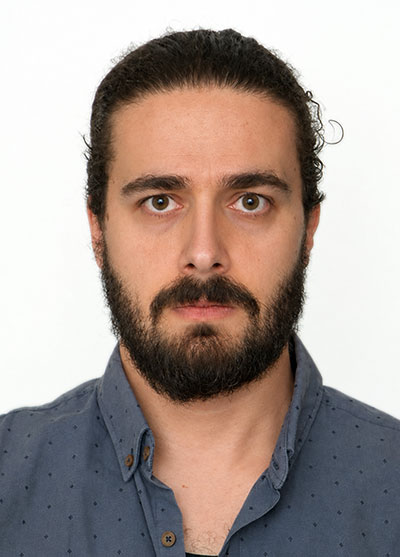
Dr Boris Tomanić
Senior research associate
BORIS TOMANIĆ a research associate, born in Belgrade in 1990. He completed his bachelor’s, master’s and doctoral studies at the Faculty of Philosophy, University of Belgrade. In 2022, he defended his dissertation entitled “Yugoslavia and Bulgaria 1941–1945: Between Conflict and Alliance”. Since 2018, he has been working at the Institute for Contemporary History in Belgrade. Previously, he worked at the Genocide Victims’ Museum and the Archives of Yugoslavia. So far, he has participated in over ten academic conferences and workshops both in Serbia and abroad, and has published more than forty academic papers, including four monographs.

Dr Luka Filipović
research associate
LUKA M. FILIPOVIĆ research associate. He graduated from the Department of History, Faculty of Philosophy, University of Belgrade in 2018, defended master thesis in 2019, and his doctoral thesis on Eurocommunism and Yugoslavia in January of 2023. He published two books and numerous articles and peer-reviewed papers. From 2024 he is research-administrator and manager of the Serbian team on the RE-ENGAGE project from the series Horizon EU. He held lectures and gave presentations at universities and scholarly gatherings in Italy, Hungary, Switzerland, Poland, Belgium and Albania (CEU, EISA, Mut zur Ethic, etc). Currently, he is working on research regarding new forms of civil activism in Serbia and Georgia in collaboration wth Norwegian Institute for Foreign Affairs (NUPI) He is editor in chief of the New Horizon portal owned by the paper Novi Magazin.

Dr Miloš Žikić
research associate
MILOŠ ŽIKIĆ (Zaječar 1990), Research Associate. He finished his basic academic studies in 2014 by defending his thesis Yugoslav Kingdom 5th Army during the April War. He completed his master’s studies in 2015, defending the thesis General Petar Nedeljković (1882–1955). He obtained his PhD in history in 2023 after defending his dissertation entitled Yugoslav-Bulgarian Relations 1929-1941. From October 2016, he spent a year in professional training at the National Museum in Zaječar, after which he passed the professional exam for the title of curator in November 2017. Since May 2018, he has been employed at the Institute for Contemporary History in Belgrade. He is the author of two monographs and one photo monography and number of scientific articles. He participated in several scientific gatherings and conferences in the country and abroad (Romania, Greece, Poland, North Macedonia). His scientific interests are focused on the military and diplomatic history of the Kingdom of Yugoslavia.

Dr Ilija Kukobat
research associate
ILIJA KUKOBAT (Belgrade 1993), research associate. He graduated in 2016, defended his master’s thesis in 2017 and received his doctorate in 2023 at the Department of History of Yugoslavia, Faculty of Philosophy in Belgrade (thesis: Air Transport in Yugoslavia 1945–1992). From March 2018 to March 2019, he worked as a volunteer at the Museum of Aviation and in May 2019, he passed the professional exam at the National Museum in Belgrade. From April 2019 to April 2023, he was a scholarship holder of the Ministry of Education, Science and Technological Development of the Republic of Serbia at the Institute for Contemporary History, where he has been employed since September 2023. He is the author of several independent and co-authored works on the history of Yugoslav aviation. He has been the editorial secretary of the journal History of the 20th Century since 2024.

Dr Nemanja Mitrović
research associate
NEMANJA V. MITROVIĆ (Belgrade 1994) is a research associate. He received his PhD from the Faculty of Philosophy in Belgrade in 2023. The dissertation topic is the relations between Yugoslavia and Romania between 1954 and 1968. For the best BA thesis in 2019, he won the “Dr Ljubomir Ljuba Petrović” Award. For the best master thesis in the field of history, he was honored with the “Gavrilo Princip” Award (2023). He has published monographs Tito–Ceausescu: Years of Rapprochement and Challenging Decade: Yugoslav-Romanian Relations 1948–1958, a book chapter in the volume New Cultural and Political Perspectives on Serbian-Romanian Relations, published by Peter Lang, and several papers in domestic and foreign journals. He participated in several international and domestic conferences. He is the secretary of the Society of Historians of Serbia “Stojan Novaković”, and the editor-in-chief of “KSIO: Humanities Journal for Postgraduates and Early Career Researchers”.

DANILO KOVAČ was born in Trebinje. With the best average in his generation, he graduated from the History Department of the Faculty of Philosophy in Banja Luka, where he completed his master’s studies in the field of general contemporary history. His master’s thesis received the award of the “Slobodan S. Begović” Foundation, awarded at the Faculty of Law of the University of Belgrade. He completed his second master’s studies in the field of history teaching methodology at the British Institute of Education, University College London. He received his doctorate from the “Sapienza” University in Rome, and spent a semester of doctoral studies at the Sorbonne University in Paris. The focus of his scientific interest is the relations between Italy and the Independent State of Croatia, as well as the methodology of teaching history.
He was awarded the Svetosava Award, the Golden Badge of the Cultural and Educational Community of Serbia, the City of Banjaluka Plaque, the Banjaluka Gymnasium Award, he was declared the best teacher of the former Yugoslavia, the most innovative teacher in Bosnia and Herzegovina, and the person of the year in the same country in the “Initiative” category. His work was recognized by the Serbian teacher award “Prosvetitelj”, and he was declared one of the 50 best teachers in the world, becoming a finalist for the UNESCO World Teacher Award.

Dragana Miladinović
Secretary of the Institute
Slavica Ćrirović
Independent accounting and financial associate
Bojana Ristić-Premović
Public Procurement Officer

Mladen Acković
Technical editor of the Institute’s publications